 info@gdap.net
Category: Blog
Benefits of Being a Dental Office Assistant

The health care industry is the fastest growing industry in the world, and the best thing is that it guarantees you a lifetime job. If you like the idea of working in the medical field but are afraid to spend years into training, why not become a dental office assistant?
Do you care about helping others and have nerves to see a little bit of blood? If yes, then working as a dental assistant might be the perfect job for you. Still not convinced?
Let us dig a little bit into the benefits of becoming an assistant.
- Forget the Boredom
Working in a dental office means that you will rarely get time to be bored. You will always be busy doing something new and interesting. You will learn something new every day, and it will grow you professionally. For instance, cleaning the surgery tools, handling the patient queries and payments, or keeping track of inventory. This job can make you a master of all.
- Calm Work Environment
You will most likely work in a private dental office in a calm and professional environment with no rush on your nerves. The office environment will be comfortable and enjoyable, unlike in many other medical fields.
- Flexible Work Timings
Moreover, you will have the advantage of working flexibly. You can either apply for a full-time or part-time job, depending on your schedule. While the working hours of private dental offices are usually fixed, if you choose to work in a hospital, you will have much more flexible timings.
- Easy Training
Unlike other medical fields, the training for becoming a dental office assistant is relatively easy and does not take years of college degrees. All you need is a high diploma and a little bit of training to get going.
A 10-week training program by Greatwood Dental Assisting Program is waiting for your enrollment. For further details, please call us at 281-728-6012.
What Are The Responsibilities Of A Dental Assistant?
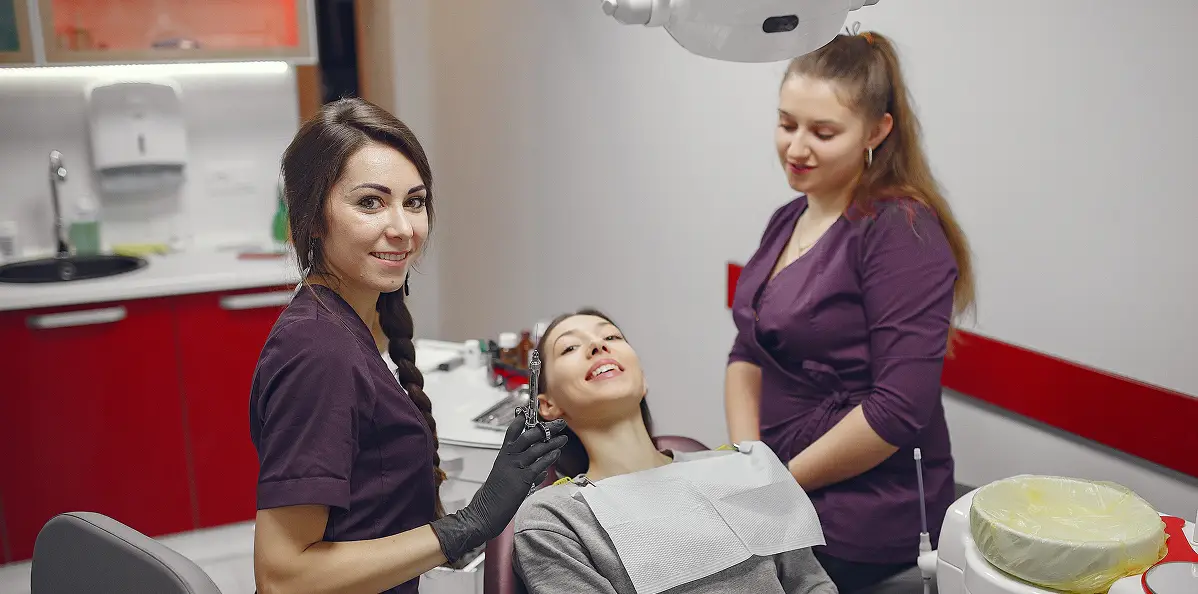
A dental assistant is an important member of a dental team. They work as the right hand of a dentist and assist them through the whole dental procedure. They increase the efficiency of a dentist to deliver high-quality oral health care. Not only that, but they also help patients to calm down before and after the checkup. Apart from these, there are lots of other responsibilities that a dental assistant carry out, such as:
- They make sure that the room environment is clean and free form all sorts of infections. Cleaning the instruments before the checkup and washing the used ones afterward, is also their duty.
- They carry out some general tasks too. Such as helping the dentist in collecting information about the oral health of a patient and managing their records.
- Some of them take extra training and become eligible to take x-rays and models of teeth.
- One of the important duties of an assistant is to guide the patients on how to take proper care of their health. As each patient have different oral health conditions and treatment, therefore, an assistant studies their conditions and gives the guidelines.
- They also keep track of office supplies and contact the vendors.
- They help in handling the reception work too. The work includes communicating with the patients to schedule appointments and tracking the billing information.
- They also act as a bridge between a patient and the dentist. At moments when a patient is unable to visit the clinic but needs emergency dental care. An assistant can communicate the situation to the dentist and convey the instructions back to the patient.
If you want to know more about the responsibilities of a dental assistant or about Greatwood Dental Assisting Program, call us on 281-728-6012. We would be glad to hear from you.
Duties of a Dental Nurse
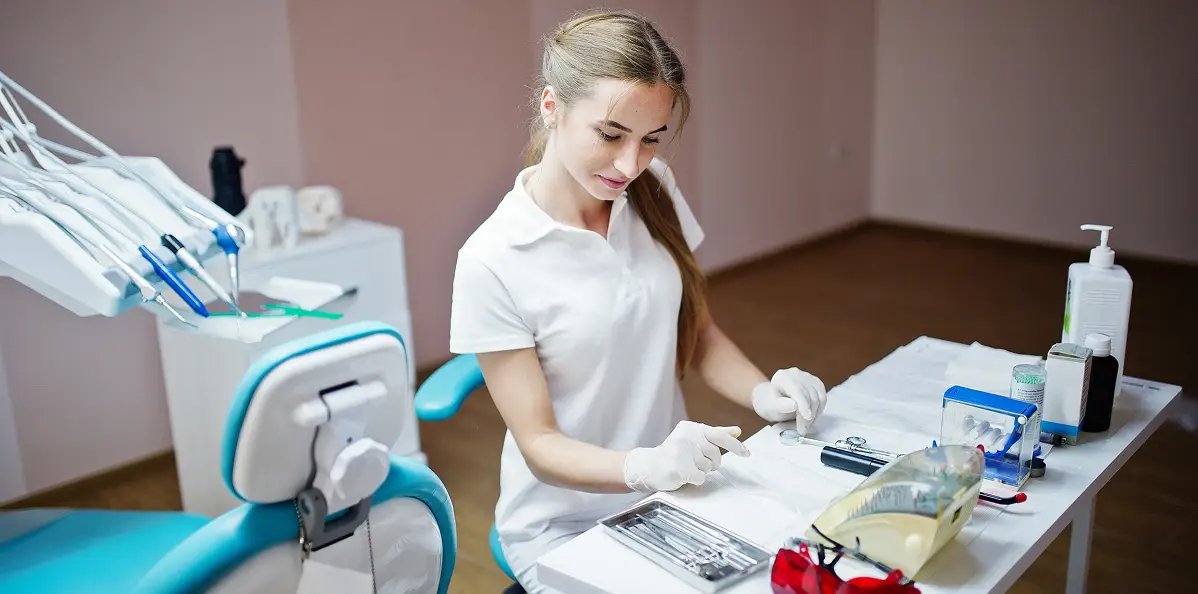
A dental nurse or assistant is an important member of a dental team. They help to make sure that good care is provided to the patient. It is important for an assistant to have a calm and friendly attitude so that patients get comfortable before and after the checkup.
Some patients may come for regular check-ups and some may come with severe pain or complications. The dental assistant reassures the patient and brings them to ease. They also support the team during overall patient care.
Discussed below are some of the duties that a nurse must be able to carry out.
- A dental nurse works closely with the dentist and provides assistance throughout the checkup. He or she prepares all the necessary instruments and materials required during the checkup. Moreover, they are also responsible to clean the used equipment.
- They ensure that the environment is clean and free from all sorts of infections.
- Some other duties can include helping the dentist to record information regarding the oral health and medical history of a patient. With additional training, a dental assistant may also take x-rays, make models of teeth and take impressions. They may also apply fluoride varnish that helps prevent tooth decay.
- They may instruct the patients on how to maintain proper oral hygiene before and after a dental procedure. For example, they may teach the patients the proper way of brushing and flossing.
- They also keep in contact with the vendors to handle the office supplies.
- May also help in reception work too, communicate with the patients to schedule appointments and keep a track of billing information.
This field promises a rewarding career and its demand is in continuous growth. If you want to know more about Greatwood Dental Assisting program please visit our website or call us on 281-975-3489. We would be more than happy to hear from you.
Dental Assistant Job Satisfaction

In every job, employees will perform higher than average when happy and at ease
with their daily 9-5. The life of a Dental Assistant is no different. There are many
comforts and perks that come with this job, which might help explain all the smiling
faces you see every time you visit. We want to mention 5 main incentives and
influences around the career path of a Dental Assistant, to better understand why
the majority seems so pleased.
When it comes down to it, we all want to be recognized for our hard work. For
many in this field, recognition never seems to be far off. Many assistants have
reported that they often feel valued by their employer and secure in their job
greatly for this reason alone. Whether it be accommodation, flexibility or simple
verbal recognition, every individual will feel compelled to continue at their best
after their dedication has been appreciated.
Being a Dental Assistant does not confine you to a lab coat and scrubs. While many
find employment with private dental practices, this career field offers many diverse
job placements. Satisfaction was reported higher from assistants who chose to
work in a specified field rather than general dentistry. Assistant jobs, such as those
in the military or government funded practices, may offer a change of scenery
increasing moral in the work environment. While busy at times, there is often a
feeling of togetherness associated with private general practices. They offer a
“working-family” environment due to the small amounts of individuals employed.
This too helps to increase job moral and satisfaction levels.
Of course, the level of certification varies dependent upon the job at hand. An
assistant who has not been DANB certified is subject to slightly less job satisfaction
than one who has been certified. This may be related to owning the knowledge of
the career you have chosen and one’s ability to assert themselves into a workplace
they may improve. Certification level also administers a portion of a Dental
Assistants’ salary. The number one motivator for the masses has always been
money, an ability to live life affordably at minimum.
To become a dental assistant, contact us about our dental assisting program near
Houston.
Dental Assistant vs Dental Hygienist
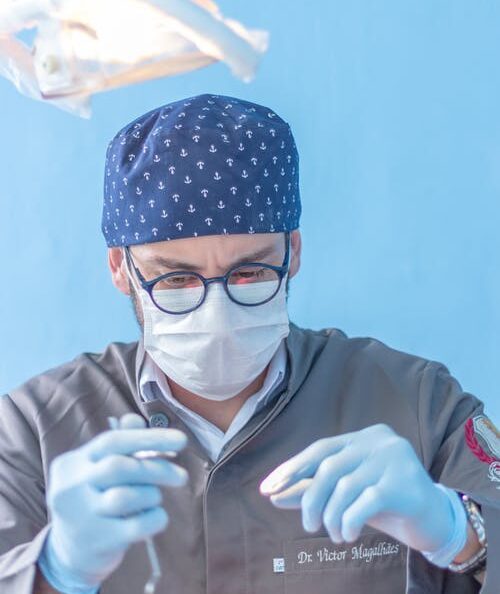
While many people might use the two titles interchangeably, there are distinct differences between dental assistants and dental hygienists.
Although dental assistants and dental hygienists perform fairly similar things on a day-to-day basis, they are not different names for the same job.
The primary difference between a dental assistant and dental hygienist is their level of interaction with the patients. While a dental assistant provides direct aid to dentists, conducting office tasks, and small, supervised jobs on patients’ teeth, a hygienist often works one-on-one with a patient and does not require constant supervision.
Dental Assistants: An Overview
The duties of a dental assistant can vary from office to office. However, generally speaking, dental assistants work directly with dentists, or support front-office operations.
Some of the typical duties performed by dental assistants are given below:
- Laying the equipment and sterilizing instruments
- Obtaining patients’ dental records
- Preparing patients for the dentist’s exam
- Offering assistance like handing instruments to dentists during procedures
- Preparing impression materials, anaesthetics, and cement
- Taking impressions of patient’s teeth (moulds)
- Taking and processing X-rays
- Instructing patients on proper dental hygiene
- Removing sutures
- Billing patients and handling payments
- Ordering dental supplies
- Performing general office work
Some states require that dental assistants be licensed. Some states have regulations that require aspiring dental assistants to complete a one-year certificate or diploma programs.
Dental Hygienists: An Overview
The dental hygienist’s sphere of duties covers various areas including pre-procedure preparation and care, in-office treatment, and post-procedure care.
A dental hygienist performs more advanced tasks that involve direct patient care. His duties include:
- Gathering health information and history from the patient
- Polishing patients’ teeth
- Removing hard and soft deposits from teeth
- Cleaning teeth including removal of tartar, plaque, and stains
- Examining gums of patients for any irregularities
- Taking and processing x-rays
- Applying fluoride treatments
- Taking impressions of patient teeth (moulds)
- Prepare a patient’s dental health chart
- Administering anaesthesia
- Tending to sutures and dressings
- Preparing clinical and laboratory diagnostic tests
- Advising patients on proper brushing and flossing habits
Dental hygienists must hold an associate’s degree (two years) to practice and a state license in the field. Other less common options include certificates, bachelor’s degree (four years) and master’s degrees (two years full time).
The U.S. Bureau of Labour Statistics (BLS) has projected a growth of 19% in the dental hygiene field until 2024, which is considerably faster when compared to other career fields.
Online VS Traditional Dental Assisting Schools Pros & Cons

Online schooling is an easy and convenient way of obtaining your education. While for many industries this may be acceptable it is not true in the case of dental assistant training. The best education you can achieve for dental assisting is within a classroom setting where hands-on learning and highly trained instructors are readily available.
Given below is a brief comparison of online education vs classroom training. The hands-on experience that you get at any dental assistant school is most important and acts as a stepping stone in your career. Students retain much more information when they are taught in a classroom setting.
Pros of Online Education
- Online education provides the convenience to learn from any place of your choice.
- Online training provides you flexibility, wherein you can plan your classes and study time according to your personal schedule.
Cons of Online Education
- The information provided during online education is fairly difficult to retain.
- The fast changing technology can create hurdles for some students.
- Students learning through online education do not have the opportunity to interact with their mentors and clear their doubts when required.
- Online learning students do not enjoy the benefit of building relationships and networks, which could give them the advantage of exchanging ideas with other classmates. The connections you make during your regular classes could be the resources throughout your career.
- The flexibility provided by online education can become a challenge for some people who do not have self-discipline.
Pros of Classroom Education
- A larger classroom becomes an interactive education platform, which promotes the exchange of ideas, questions and answers, critical thinking, problem-solving and network building.
- The ability to learn a skill by personally performing it is vastly different and far more effective than textbook learning. You can never put a price on ‘hands-on-experience’.
- Classroom learning provides the students the opportunity to gain information in different ways. This could be through audio, through a visual or through group interaction.
- Students have the opportunity to talk one-on-one with the instructors to clear their doubts or seek any clarification.
Cons of Classroom Education
- Students who lack confidence might find it difficult to speak up in a large classroom setting. This in-turn could hamper their learning process.
Conclusion
While both, classroom education and online education have their own advantages and disadvantages, the advantages enjoyed by students of classroom training far outweigh the advantages enjoyed by the students who undergo online education.
Best Online Dental Assisting Schools
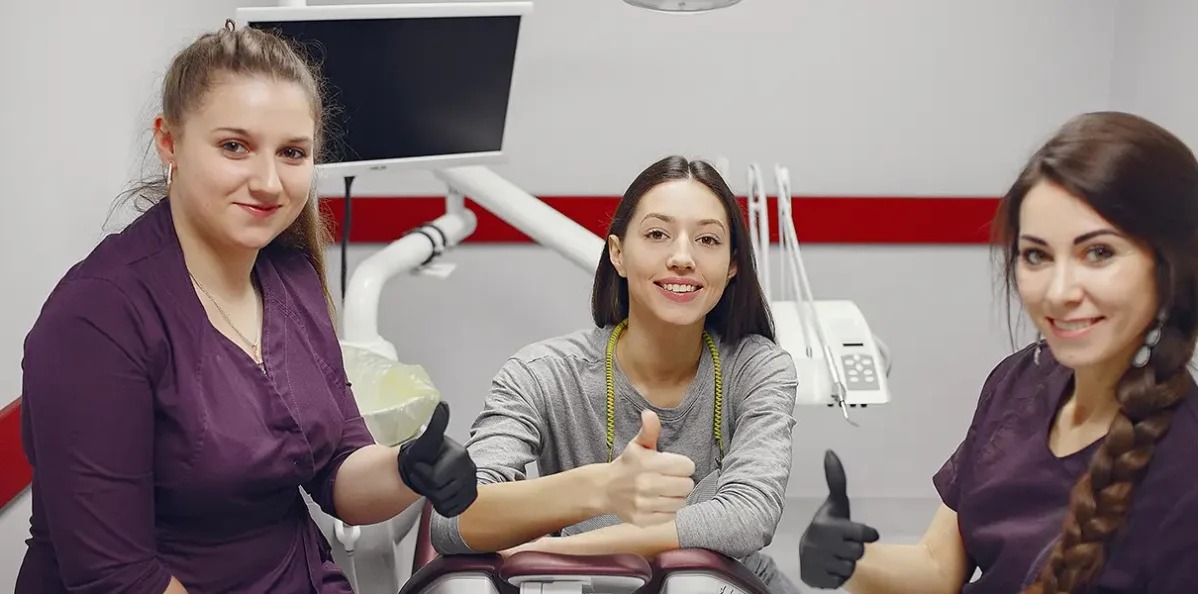
If you want to undergo a dental assistant program online, you should consider how much time you are willing to commit to earning a certificate.
Some dental assistant certificate programs are individually paced, while others are taught through a cohort learning format. Individual programs allow you to complete the course at your own pace, while cohort programs require you to work at the same pace as the rest of the class.
Three of the top online dental assisting schools are discussed below.
Indiana University-Purdue University
It is a public research university located in Indianapolis. The ‘dental assistant certificate online program’ at IUPUI is offered by the School of Dentistry and comprises of lectures, laboratory classes, and clinical instructions. Notable classes include oral histology and embryology, oral pathology, dental therapeutics, and microbiology. Even though the nonclinical coursework is completed online, online learners are required to travel to the campus one weekend every month throughout the duration of the course.
As a flexible program, distance students can complete coursework at their convenience. Online work includes reading, writing, and video assignments.
The dentistry program is accredited by the American Dental Association commission in Dental Accreditation while the University is accredited by the Higher Learning Commission.
William Paterson University, New Jersey
It is the second-oldest of the nine state colleges and universities in New Jersey. The school was founded in 1855 and roots its values in academic excellence, creating knowledge, student success, diversity, and citizenship.
School of Continuing and Professional Education offers the ‘dental assistant certification online program’. The curriculum includes dental policies and guidelines, dental operatory, and dental equipment. Coursework covers oral and jaw anatomy, dental physiology, tooth structure and surfaces, tooth charting, oral health, disease prevention, and infection control.
William Paterson University of New Jersey is accredited by the Middle States Commission on Higher Education.
University of Georgia
This is a top public research university located in Athens. Founded in 1785, UGA is the state’s oldest institution of higher education.
UGA’s ‘dental assistant certification online program’ is offered through the Centre for Continuing Education and Hotel. In this program, students learn dental terminology, oral anatomy, medical records management, accounts receivable, insurance billing and patient scheduling. Topics also cover procedural and diagnostic coding and reimbursement management.
UGA’s dental program can be completed in approximately 150 hours. Classes are taught by a registered dental assistant and dental hygienist.
The University has been accredited by Southern Association of Colleges and Schools.
Different Types of Impressions and Materials
Contact Us
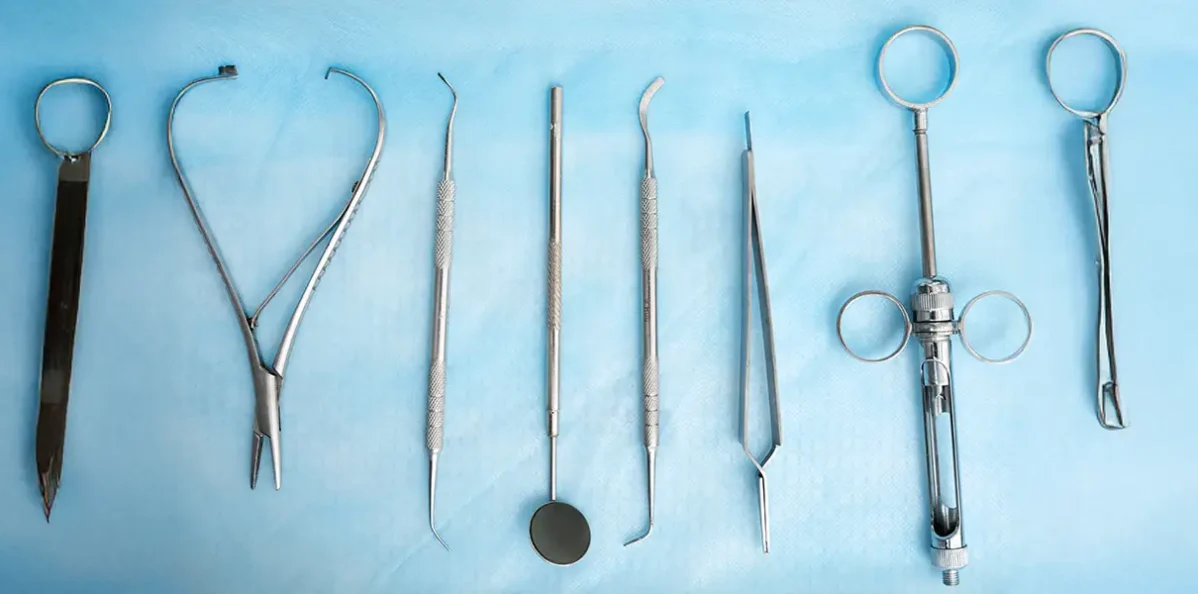
* Fields with asterisks are required.Many dental procedures will require an impression to be taken of the patient’s teeth and surrounding oral tissues. Most common types of impressions obtained in a dental practice:
- Preliminary impression – is used for making (a) diagnostic models, (b) custom trays for partial or dentures, (c) provisional coverage for crown and bridge cases, (d) orthodontic appliances, etc.
- Final impression – Shows accurate details of the tissue and tooth structure for the laboratory technician to make a cast restoration (inlay, onlay, veneer, crowns/ bridge).
- Occlusal (bite) registration – Reproduces the occlusal relationship of the maxillary and mandibular teeth when occluded.
- Impression Trays – Impression trays are supplied as quadrant trays, which cover half of the arch; Anterior trays, which are suited for the anterior teeth; and full-arch trays, which cover the complete arch.
- Impression Materials – Impression materials are selected because of their unique qualities that allow dentists to obtain the most accurate reproduction. Impression material is classified according to specific properties.
- Mechanical property – Indicates the flexibility of a material. The two types of material are inelastic and elastic. Inelastic material is rigid and will fracture when deformed. This type includes impression compounds, impression plaster, and zinc oxide-eugenol (ZOE) impression paste. Elastic materials can be deformed and returned to their natural appearance. This type includes alginate, elastomers, and agar.
- Setting property – Irreversible material indicates that a chemical reaction has occurred and that the material can not go back to its original state. This type includes alginate, elastomeric impression material, ZOE impression paste, and impression plaster. A reversible material can be altered by temperature, including agar and impression compounds.
- Types of Impression Material – Alginate is an irreversible hydrocolloid and is a material of choice when taking preliminary impressions for diagnostic purposes. Alginate consists of potassium alginate, which is derived from seaweed, calcium sulfate, trisodium phosphate, diatomaceous earth, zinc oxide, and potassium titanium fluoride. Alginate is available in two settings: normal set, which has a working time of two minutes and a setting time of 4 ½ minutes, and fast set, which has a working time of 1 ½ minutes and a setting time of 2 minutes. Most offices prefer using a normal alginate set to give them more working time. Elastomeric impression material has an elastic or rubberlike quality after setting. These materials are supplied as a base and catalyst and are self-curing. Each type of material has different properties and characteristics. Final impressions material is supplied in three forms or viscosity.
- Light body is the easiest-flowing material to flow.
- The regular body is slightly thicker than the light body form.
- The heavy body is the thickest of the three forms.
At the Greatwood Dental Assisting Program, students are exposed to all of the above materials and trays to get a better understanding of how to work with them after graduation. We encourage students to take impressions of each other so they can make models for bleaching trays.
Call Us Now – 281-728-6012
Greatwood Dental Assisting Program 19875 Southwest Freeway, Suite 120 Sugar Land, TX. 77479. Approved and Regulated by TWC Career Schools & Colleges (281) 712-8747.
Schedule a Campus Tour and Interview with Dr Jafferally
Want to see where you’ll be training? Schedule a one-on-one tour with Dr. Jafferally and our team to experience the facilities firsthand. Learn more about our state-of-the-art equipment, expert instructors, and comprehensive curriculum designed to fast-track your career in dental assisting.
Start your journey today and become a dental assistant with the best training in dental assistant programs in Houston, TX!
What does it take to become a Dental Assistant at Greatwood Dental Assisting Program?

Dental assistant is a career that you might find very rewarding. Becoming a dental assistant involves more than acquiring knowledge from text books. Developing chairside hand skills is another component, which is essential in completing your education. At Greatwood Dental Assisting Program we strongly believe in Clinical and didactic education together produces well rounded dental assistants.
Greatwood Dental Assisting Program offers a certificate after the completion of the course. The following are topics that are required to teach for a 10 week program:
Profession (Profession & Legal Aspects of Dental Assisting)
The Sciences (Anatomy and Physiology)
Infection Prevention and Hazardous Materials
Dental Treatment, Clinical Dentistry and Moisture Control
Patient Care including Medical Emergencies & CPR
Dental Imaging (Radiation Safety & Oral Radiology)
Preventive Dentistry (Home Care Techniques and Nutrition)
Restorative Dentistry (Instruments, Restorative Material)
Specialized Dentistry (Periodontics, Endodontics, Pediatric Dentistry, etc)
Preparation for Employment (Resume’s)
Besides the educational part of dental assisting, the state board of dental examiners
may require background checks on every applicant. The student will have a time limit to
submit the report to the state board before it expires, along with all documents required.
A copy of the state board examination results, CPR certification, state ID with social security
card along with the state board application signed and dated by the notary public must be sent
to the state board. Soon after the documents are received by the state board, they will
notify you to call a number with a code, to set –up appointment for fingerprinting. The
fingerprints are submitted to the state board , FBI and the National Security Agency, The
students registration certificate will be sent to the student . The student is now a Registered
Dental Assistant, ready to perform duties that are allowed by the state board of dental
Examiners.
New graduates are not required to do continuing education (CE) in the first year after graduation. However, after the first year, six hours of CE is required annually before you can renew your RDA certificate.
For further information, please contact:
Greatwood Dental Assisting Program
19875 Southwest Freeway, Ste. 120
Sugar Land, TX. 77479
(281) 728-6012
Or visit our website at: www.gdap.net
Characteristics of a Professional Dental Assistant

Contact Us
* Fields with asterisks are required.Becoming a dental assistant in Houston, TX, involves more than acquiring the knowledge and developing the hands-on skills necessary to perform a variety of duties. Being professional and responsible adds character to your personality and work ethic, which are very important in a work environment.
Professionalism: Professionalism is an attitude that is apparent in everything you do or say, in or out of the dental office. Professionalism is what distinguishes people who think of it as just “having a job” from those “pursuing a career.” You chose an exciting and challenging career when you decided to become a dental assistant professional. Dental assisting requires dedication, commitment to continuing education, integrity, and responsibility. The professional dental assistant is a vital member of the dental health care team. A highly skilled dental assistant will develop the qualities of a team leader. Assistants will be able to lead and take responsibility for her/his actions and help develop other team members to become efficient at their skills. The dental assistant must take pride in her appearance and always look her/his best. Many patients always welcome a friendly and pleasant disposition. Dental assistants must show compassion and care for patients, being most helpful before and after dental procedures.
Responsibilities ( Consent Forms): Assistants prepare for dental procedures before the doctor is in the treatment room. Assistants are responsible for all necessary consent forms signed by the patient before treatment is rendered. All dental assistants will learn tray set-ups for all dental procedures and learn how to educate their patients about the treatment being done. Assistants are also responsible for giving patients post-operative instructions on surgical procedures and/or any other dental procedures.
Sterilization: In a dental office, dental assistants are exposed to patient’s blood and saliva. It is imperative to protect yourself by wearing the appropriate Personal Protective Equipment (PPE). Other responsibilities include sterilizing dental instruments and disinfecting the treatment rooms. The U.S. Environmental Protection Agency (EPA) registers and regulates those disinfectants to be used by dental offices. All containers with disinfectants are to be labeled, and hazardous materials are to be mentioned. During the patient’s treatment, the equipment and treatment room surface becomes contaminated with saliva or by aerosol containing blood and/or saliva. Barriers are in place for surfaces and equipment protection. Plastic wraps and plastic bags are most commonly used as barriers.
Auto-Clave: The assistants will maintain the autoclave and biosensor monitoring records properly. Assistants are required to keep proper records on employee immunizations for Hepatitis B. According to OSHA guidelines, any accidents incurred by either an employee or patient need to be logged in a record book. Assistants will keep up with biohazard containers and schedule for pick-up to dispose of them properly. Infection control is a rapidly expanding and changing area within the dentistry profession. Everyone in the dental office must grasp the importance of good infection control. Dental offices are required by law to provide annual OSHA and HIPPA compliance updates to all employees in order to protect them from unknown pathogens.
Call Us Now – 281-728-6012
Dental Laboratory: Assistants are also responsible for all dental laboratory cases. All cases should be disinfected, wrapped, and boxed for pick-up from the outsourced dental laboratory. A system should be in place to keep up with patient cases, pick-ups, and deliveries. These are some of the duties and responsibilities that any dental office expects from a Registered Dental Assistant. Never take this position lightly; remember you are an essential part of the dental health profession. For further information, please contact the Greatwood Dental Assisting Program.
Schedule a Campus Tour and Interview with Dr Jafferally
Want to see where you’ll be training? Schedule a one-on-one tour with Dr. Jafferally and our team to experience the facilities firsthand. Learn more about our state-of-the-art equipment, expert instructors, and comprehensive curriculum designed to fast-track your career in dental assisting.
Start your journey today and become a dental assistant with the best training in dental assistant programs in Houston, TX!