 info@gdap.net
How Hands-On Dental Training Prepares You for Real Patients
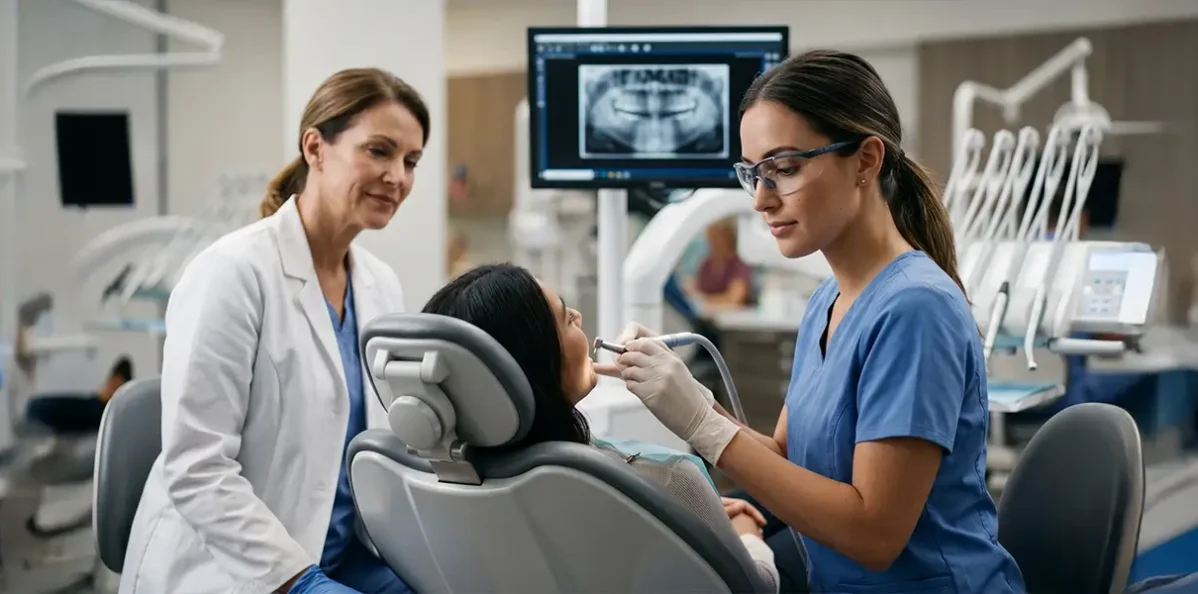
A dental assisting hands-on program allows students to experience how a real dental office operates before entering the workforce. Classroom instruction teaches important concepts, but clinical exposure allows students to apply those lessons during actual patient care situations.
Dental assistants support many parts of a dental appointment, including preparing treatment rooms, organizing instruments, assisting during procedures, and helping patients feel comfortable. Learning these responsibilities through supervised clinical training often gives students a better understanding of what daily work inside a dental office involves.
Why Practical Training Matters
Dental offices can be busy environments where organization and communication are important throughout the day. Appointment schedules may change quickly, and dental assistants often need to adapt while maintaining efficiency and patient comfort.
Hands-on instruction introduces students to real workflows that are difficult to understand fully in a classroom alone. During clinical training, students may practice:
- Chairside assisting
- Treatment room preparation
- Instrument sterilization
- Dental impressions
- X-ray preparation
- Infection control procedures
Repeated exposure to these responsibilities can improve coordination and familiarity with dental office routines.
According to information available on the GDAP website, students receive supervised instruction in a functioning dental office environment and gain exposure to real patient care procedures during training.
Building Confidence With Patient Interaction
Many students initially believe technical procedures will be the hardest part of dental assisting. However, patient interaction often becomes one of the biggest learning experiences during training.
Every patient responds differently during appointments. Some patients may feel nervous, ask detailed questions, or require additional reassurance during treatment. Hands-on instruction allows students to observe how dental teams communicate professionally and maintain a calm environment throughout procedures.
Working directly with patients may also make the transition into a first dental assisting role feel more comfortable. Exposure to appointments, office routines, and communication styles often helps students feel better prepared for the workforce.
Learning Beyond Textbooks
Dental assisting programs commonly include instruction in anatomy, radiology, infection control, and dental terminology. Clinical exposure allows students to apply those concepts during daily procedures.
Students may gain experience with:
- Organizing instruments and supplies
- Preparing patients for procedures
- Assisting dentists during treatment
- Maintaining sterilization procedures
- Following safety protocols
- Managing treatment room setup
Simple responsibilities, such as preparing trays or organizing instruments, often become easier with repetition and supervised practice.
The GDAP website also notes that students are encouraged to participate in additional observation opportunities while the office is operating, which may provide greater exposure to daily patient care routines.
Understanding Daily Office Operations
Dental offices rarely follow the same schedule every day. Procedures may take longer than expected, emergency visits may occur, and patient schedules can change throughout the day.
Clinical training helps students understand how workflow, communication, and preparation affect patient care. Learning how to stay organized during busy schedules is an important part of dental assisting.
Students also begin to understand how small details can influence efficiency in the office. Preparing treatment rooms ahead of appointments, organizing instruments properly, and communicating clearly with team members all contribute to smoother daily operations.
Developing Infection Control Habits
Infection control is one of the most important responsibilities in a dental office. Dental assistants must learn to maintain clean treatment areas and consistently follow sterilization procedures.
During supervised instruction, students may practice:
- Instrument sterilization
- Surface disinfection
- Safe handling of dental materials
- Proper use of protective equipment
Developing these habits early may help students feel more prepared for professional clinical responsibilities later.
Preparing for Career Opportunities
Employers often value candidates who already understand the pace and expectations of a working dental office. A dental assistant Program in Sugar Land, TX that includes supervised clinical instruction may give students greater familiarity with patient care procedures and daily office responsibilities before beginning employment.
Programs that combine classroom learning with practical instruction often provide broader preparation for students entering dental assisting careers.
The Greatwood Dental Assisting Program offers supervised clinical instruction designed to prepare students for responsibilities commonly performed in dental offices.
Doctor Bio
Dr. Jafferally is a graduate of Tufts School of Dental Medicine in Boston, Massachusetts. Dr. Jafferally came to Texas in 2001. His philosophy and vision for the Greatwood Dental Assisting Program are to offer quality training and education in dental care in a comfortable, modern environment.
Frequently Asked Questions
Students may learn chairside assisting, sterilization procedures, infection control, patient communication, and treatment room preparation.
Yes. Repeated exposure to clinical routines and patient interaction often helps students feel more comfortable entering the workforce.
Programs commonly include anatomy, radiology, dental terminology, infection control, and practical chairside instruction.
Practical experience may help students become more familiar with daily office procedures and patient-care responsibilities before employment begins.