 info@gdap.net
Category: Blog
How AI and Digital Workflows Are Transforming Dental Practices

Technology is changing the way dental teams deliver patient care and manage everyday responsibilities. From digital imaging to electronic records, many dental offices now rely on technology to improve efficiency, communication, and patient experiences. Students exploring dental assistant programs in Sugar Land can benefit from understanding how these advancements are shaping the profession and why digital skills have become increasingly valuable in modern dental practices.
Artificial intelligence is increasingly being incorporated into dental practices to support clinical and administrative workflows. AI complements the dental team by assisting with routine tasks, while dentists remain responsible for diagnosis and treatment decisions.
How AI Is Transforming Modern Dental Practices
AI in dentistry refers to software that helps organize clinical information, analyze dental images, and support everyday workflows within a dental office. These tools help organize information and improve efficiency while licensed dental professionals remain responsible for clinical decisions.
Today, AI may help dental practices by:
- Supporting the review of digital radiographs for closer clinical evaluation.
- Organizing patient information and electronic records.
- Assisting with appointment scheduling and administrative tasks.
- Helping streamline documentation and treatment planning.
- Improving workflow by reducing repetitive manual processes.
As digital technologies become more widely adopted, they are helping dental teams work more efficiently while supporting, not replacing, professional expertise.
What Are Digital Workflows in a Dental Office?
A digital workflow is the process of using connected technologies throughout different stages of patient care. Instead of relying only on paper records or traditional methods, many dental offices use digital systems to improve communication and efficiency.
Examples of digital workflows include:
- Electronic patient records
- Digital radiography
- Intraoral scanners
- Digital treatment planning software
- Secure communication with dental laboratories
These systems improve access to patient information and support more efficient communication within the dental team.
Greatwood Dental Assisting Program provides hands-on clinical training with patients and exposure to modern dental technologies, including digital radiography, helping students become familiar with workflows commonly used in today’s dental practices.
The Benefits of AI and Digital Workflows
Artificial intelligence and digital workflows help dental practices improve efficiency, organization, and communication. Although these technologies do not replace the expertise of dental professionals, they can improve many routine processes performed throughout the day.
Some of the key benefits include:
- Faster access to patient records and clinical information.
- Improved communication between the dental team and dental laboratories.
- Better organization of appointments, documentation, and administrative tasks.
- More consistent digital record management.
- Increased efficiency that allows the dental team to spend more time interacting with patients.
Familiarity with these technologies helps dental assistants adapt to today’s digital practice environment.
Why Future Dental Assistants Need Digital Skills
Dental assistants contribute to the smooth day-to-day operation of modern dental practices. As technology continues to evolve, employers increasingly value candidates who are comfortable working with digital systems alongside traditional clinical responsibilities.
Important areas of knowledge include:
- Understanding digital radiography and imaging systems.
- Becoming familiar with electronic patient records.
- Learning how digital workflows support patient care.
- Communicating effectively with dentists, hygienists, and laboratory teams.
- Adapting to new technology as dental practices continue to evolve.
Hands-on clinical experience helps students build confidence before entering the workforce. A comprehensive training program that includes practical clinical experience, digital radiography, CPR certification, and externship opportunities can help prepare students for entry-level dental assisting roles.
As the dental profession continues to adopt new technologies, concepts such as AI-powered dental education highlight the growing importance of digital literacy alongside strong clinical skills.
Conclusion
Artificial intelligence and digital workflows are becoming part of everyday dental practice. Students looking for a dental assistant near me can benefit from a program that combines hands-on clinical experience with exposure to modern dental technologies, helping prepare them for today’s workplace.
Frequently Asked Questions
AI in dentistry uses computer software to assist with tasks such as reviewing digital images, organizing patient information, and supporting clinical workflows. Dentists remain responsible for all diagnoses and treatment decisions.
Digital workflows streamline record management, imaging, communication, and documentation, helping dental teams work more efficiently while improving access to patient information.
Many dental offices now use digital technologies every day. Understanding these systems helps students transition more confidently into modern clinical environments.
AI supports the analysis of digital information and helps streamline clinical workflows, but professional judgment continues to guide patient care.
Many practices use digital radiography, electronic patient records, intraoral scanners, practice management software, and digital treatment planning systems to support patient care.
Why Communication Skills Are Essential for Dental Assistants

Learning clinical procedures is only part of becoming a successful dental assistant. Every patient interaction also depends on clear communication, active listening, and the ability to make people feel comfortable throughout their visit. Students exploring dental assistant programs in Sugar Land often expect to focus primarily on clinical techniques, but communication is equally important, as it influences every stage of patient care. From welcoming patients to supporting the dentist during treatment, these skills help create a more organized, efficient, and positive dental experience.
How Dental Assistants Use Communication Every Day
Communication begins before treatment starts. Dental assistants greet patients, confirm health information, answer questions, and help people understand what to expect during their appointment. These conversations build trust while ensuring the dental team has accurate information before care begins.
As treatment progresses, dental assistants coordinate with dentists, hygienists, and front office staff to keep appointments running smoothly. They explain procedures in simple language, review home care instructions, and accurately document important clinical information. Strong dental assistant communication skills also involve recognizing when someone needs additional explanation or reassurance. Paying attention to verbal and nonverbal cues helps dental assistants respond appropriately while creating a more comfortable patient experience.
Essential Communication Skills Every Dental Assistant Should Develop
Communication is more than speaking clearly. It includes listening carefully, sharing information accurately, and adapting conversations to meet each patient’s needs. These abilities strengthen teamwork while helping patients feel informed and respected throughout their visit.
Some of the most valuable dental assistant skills include:
- Active listening.
- Clear verbal communication.
- Professional teamwork.
- Accurate clinical documentation.
- Empathy and patience.
- Attention to nonverbal communication.
- Professionalism during busy appointments.
These skills continue to develop with practice and clinical experience, making dental assistants valuable members of the dental team while improving both patient care and workplace efficiency.
How Good Communication Improves Patient Care
Good communication helps patients feel informed before, during, and after treatment. When dental assistants explain procedures in clear, everyday language, patients are more likely to understand their care and feel comfortable asking questions. This encourages informed decisions and helps them follow home care instructions more confidently.
Communication also contributes to patient safety. Confirming medical histories, allergies, medications, and treatment plans with both the patient and the dental team helps reduce misunderstandings and supports coordinated care.
Common Communication Challenges Dental Assistants Face
Every patient has different concerns, communication styles, and comfort levels. Some may feel anxious about treatment, while others need extra time to understand instructions. Dental assistants learn to adapt their approach so information remains clear, respectful, and easy to follow.
Other common challenges include:
- Explaining dental terminology in simple language.
- Communicating with children and older adults.
- Managing multiple responsibilities during busy schedules.
- Working effectively with the entire dental team.
Developing confidence in these situations comes through practice, observation, and hands-on clinical experience.
Tips to Improve Communication as a Dental Assistant
Strong communication develops over time and improves with consistent practice. Students can strengthen these abilities by listening carefully before responding, maintaining professional body language, asking questions when clarification is needed, and confirming that patients understand important instructions. Seeking feedback from instructors and practicing with real patients also builds confidence.
How a Dental Assistant Program Will Help
Classroom instruction introduces communication principles, while clinical training gives students opportunities to apply them in realistic patient situations. Learning how to communicate professionally with patients and coworkers prepares graduates for the pace and expectations of a modern dental practice.
If you are comparing options after searching for a dental assistant near me, choose a program that emphasizes both clinical knowledge and interpersonal development. Greatwood Dental Assisting Program combines hands-on education with practical communication training to help students enter the workforce prepared for real-world responsibilities.
Frequently Asked Questions
They help dental assistants build patient trust, support teamwork, explain procedures clearly, and contribute to a positive patient experience.
Active listening, clear verbal communication, empathy, professionalism, teamwork, and accurate documentation are among the most important skills.
They use calm, reassuring language, explain each step clearly, encourage questions, and pay attention to verbal and nonverbal signs of discomfort.
Yes. Students develop these abilities through classroom learning, instructor feedback, and supervised clinical practice.
Employers commonly value communication, professionalism, organization, adaptability, teamwork, reliability, and empathy.
References
- American Dental Association (ADA). Careers in Dentistry.
- Commission on Dental Accreditation (CODA). Accreditation Standards for Dental Assisting Education Programs.
How Fast Can You Start Working After a Dental Assisting Program?

Starting a new career in dental assisting often comes with questions about timing and expectations. Many students want a clear idea of how quickly they can move from training into a real job. Unlike longer healthcare paths, dental assisting offers a more direct transition into clinical work. Understanding what affects this timeline helps you plan your next steps with more confidence.
How Soon Can You Begin After Completing Training?
Students often ask how quickly they can start working after dental assistant training, especially when planning a career change. The timeline is not fixed. It depends on how comfortable you are performing basic clinical tasks and how well your program prepares you for real patient care.
Dental assisting is a hands-on role. You are expected to support procedures, manage instruments, and follow infection control protocols. Once you can perform these tasks consistently, you are typically ready to begin applying for entry-level roles. In many cases, programs that include hands-on exposure, such as those offered through a dental assistant school in Sugar Land, make this transition more direct.
What Shapes Your Start Timeline?
A combination of preparation and external factors influences your ability to begin working:
- Completion of your program
- Exposure to real or simulated clinical settings
- Familiarity with instruments and chairside tasks
- State-specific certification requirements
- Availability of entry-level positions
Those who practice consistently during training often move into roles with fewer delays. They require less adjustment when entering a working dental environment.
Certifications and Basic Requirements
Certain states require additional certifications before you can perform tasks such as taking X-rays or assisting with specific procedures. These may include radiology permits, infection control certification, or CPR training.
These requirements can slightly extend your timeline, but they are necessary for patient safety. In some cases, employers may allow you to complete them shortly after being hired, depending on local regulations.
Why Hands-On Training Makes a Difference
Hands-on exposure changes how prepared you feel on your first day in a dental office. It builds familiarity with instruments, patient positioning, and how procedures are supported in real time.
For example, during your first week on the job, you may be asked to set up trays, pass instruments during procedures, maintain suction, and prepare treatment rooms between patients. Students who have practiced these steps during training can perform them with less hesitation.
This type of preparation reduces uncertainty and allows you to focus on accuracy rather than figuring out the workflow.
When Do Most Students Start Working?
Many graduates begin applying for positions immediately after completing their program. It is common for candidates to secure entry-level roles within a few weeks, particularly in areas with steady demand.
Programs such as the Greatwood Dental Assisting Program are structured around real office workflow, which supports a smoother transition into employment. Even with strong preparation, the exact timeline still varies based on hiring needs, interview performance, and scheduling flexibility.
What Can Help You Get Hired Faster?
A few practical steps can improve how quickly you enter the workforce:
- Prepare a clear resume that reflects your clinical training
- Review common procedures before interviews
- Be open to entry-level roles in different types of practices
- Communicate clearly and maintain professionalism
Employers often look for candidates who can follow instructions, stay organized, and adapt to a team environment.
What to Expect in Your First Role
Your first position will focus on learning how the office operates. Tasks may include assisting during procedures, preparing instruments, sterilizing equipment, and managing patient flow.
During the early stage, consistency matters more than speed. As you repeat tasks and become familiar with the routine, your efficiency improves. Over time, you will take on more responsibilities as your familiarity with procedures increases.
FAQs
Many graduates apply for jobs immediately after completing their program. Some begin working within a few weeks, depending on readiness and job availability.
This depends on state regulations. Some roles require certification before performing certain tasks, while others allow completion after hiring.
Some students take entry-level roles during training if schedules allow, which can provide early exposure to a dental office setting.
Basic chairside assisting, infection control, organization, and communication are important for entry-level positions.
Yes, it reduces the learning curve and helps you adjust faster in a real clinical environment.
It is normal to feel uncertain. Most skills improve with repetition and experience during the first few weeks on the job.
Meet Dr. Akbar H. Jafferally, DMD
Dr. Jafferally is a graduate of Tufts School of Dental Medicine in Boston, Massachusetts. He has practiced in Texas since 2001. His approach to education focuses on practical skill development and real clinical understanding.
His vision is to provide structured training in a modern environment where students can build confidence and transition into patient care settings with clarity.
If you are considering training, programs like the Greatwood Dental Assisting Program are designed to prepare students for real clinical settings and support a smoother transition into the workforce.
How Hands-On Dental Training Prepares You for Real Patients
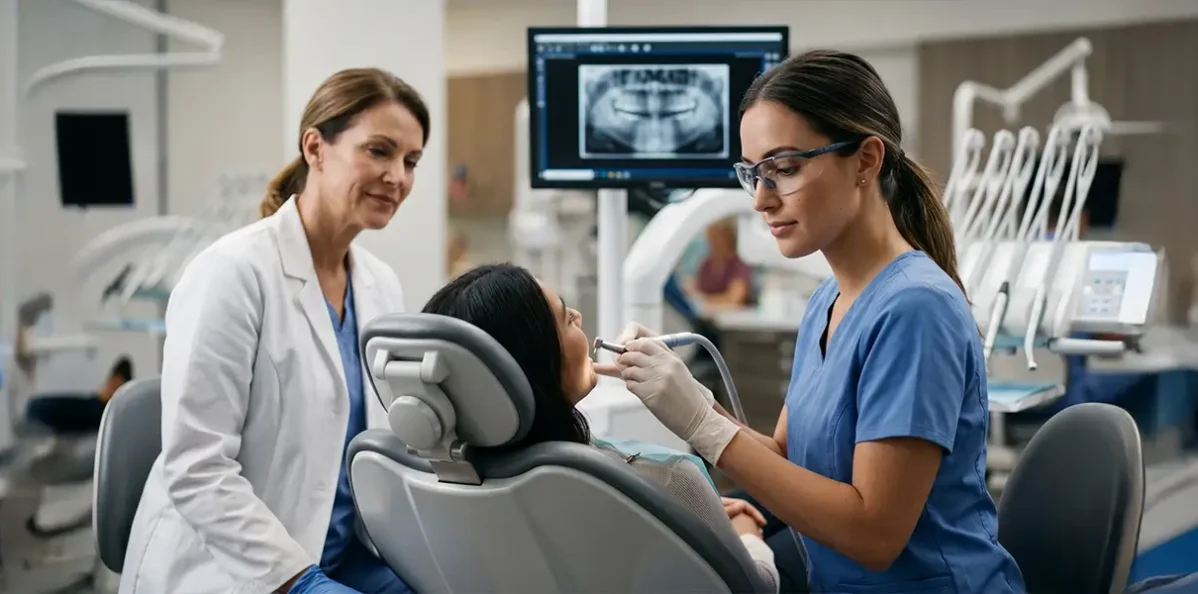
A dental assisting hands-on program allows students to experience how a real dental office operates before entering the workforce. Classroom instruction teaches important concepts, but clinical exposure allows students to apply those lessons during actual patient care situations.
Dental assistants support many parts of a dental appointment, including preparing treatment rooms, organizing instruments, assisting during procedures, and helping patients feel comfortable. Learning these responsibilities through supervised clinical training often gives students a better understanding of what daily work inside a dental office involves.
Why Practical Training Matters
Dental offices can be busy environments where organization and communication are important throughout the day. Appointment schedules may change quickly, and dental assistants often need to adapt while maintaining efficiency and patient comfort.
Hands-on instruction introduces students to real workflows that are difficult to understand fully in a classroom alone. During clinical training, students may practice:
- Chairside assisting
- Treatment room preparation
- Instrument sterilization
- Dental impressions
- X-ray preparation
- Infection control procedures
Repeated exposure to these responsibilities can improve coordination and familiarity with dental office routines.
According to information available on the GDAP website, students receive supervised instruction in a functioning dental office environment and gain exposure to real patient care procedures during training.
Building Confidence With Patient Interaction
Many students initially believe technical procedures will be the hardest part of dental assisting. However, patient interaction often becomes one of the biggest learning experiences during training.
Every patient responds differently during appointments. Some patients may feel nervous, ask detailed questions, or require additional reassurance during treatment. Hands-on instruction allows students to observe how dental teams communicate professionally and maintain a calm environment throughout procedures.
Working directly with patients may also make the transition into a first dental assisting role feel more comfortable. Exposure to appointments, office routines, and communication styles often helps students feel better prepared for the workforce.
Learning Beyond Textbooks
Dental assisting programs commonly include instruction in anatomy, radiology, infection control, and dental terminology. Clinical exposure allows students to apply those concepts during daily procedures.
Students may gain experience with:
- Organizing instruments and supplies
- Preparing patients for procedures
- Assisting dentists during treatment
- Maintaining sterilization procedures
- Following safety protocols
- Managing treatment room setup
Simple responsibilities, such as preparing trays or organizing instruments, often become easier with repetition and supervised practice.
The GDAP website also notes that students are encouraged to participate in additional observation opportunities while the office is operating, which may provide greater exposure to daily patient care routines.
Understanding Daily Office Operations
Dental offices rarely follow the same schedule every day. Procedures may take longer than expected, emergency visits may occur, and patient schedules can change throughout the day.
Clinical training helps students understand how workflow, communication, and preparation affect patient care. Learning how to stay organized during busy schedules is an important part of dental assisting.
Students also begin to understand how small details can influence efficiency in the office. Preparing treatment rooms ahead of appointments, organizing instruments properly, and communicating clearly with team members all contribute to smoother daily operations.
Developing Infection Control Habits
Infection control is one of the most important responsibilities in a dental office. Dental assistants must learn to maintain clean treatment areas and consistently follow sterilization procedures.
During supervised instruction, students may practice:
- Instrument sterilization
- Surface disinfection
- Safe handling of dental materials
- Proper use of protective equipment
Developing these habits early may help students feel more prepared for professional clinical responsibilities later.
Preparing for Career Opportunities
Employers often value candidates who already understand the pace and expectations of a working dental office. A dental assistant Program in Sugar Land, TX that includes supervised clinical instruction may give students greater familiarity with patient care procedures and daily office responsibilities before beginning employment.
Programs that combine classroom learning with practical instruction often provide broader preparation for students entering dental assisting careers.
The Greatwood Dental Assisting Program offers supervised clinical instruction designed to prepare students for responsibilities commonly performed in dental offices.
Doctor Bio
Dr. Jafferally is a graduate of Tufts School of Dental Medicine in Boston, Massachusetts. Dr. Jafferally came to Texas in 2001. His philosophy and vision for the Greatwood Dental Assisting Program are to offer quality training and education in dental care in a comfortable, modern environment.
Frequently Asked Questions
Students may learn chairside assisting, sterilization procedures, infection control, patient communication, and treatment room preparation.
Yes. Repeated exposure to clinical routines and patient interaction often helps students feel more comfortable entering the workforce.
Programs commonly include anatomy, radiology, dental terminology, infection control, and practical chairside instruction.
Practical experience may help students become more familiar with daily office procedures and patient-care responsibilities before employment begins.
How Fast Can You Become a Dental Assistant Through GDAP?

If you are exploring a career in dentistry, you may be asking, how fast can you become a dental assistant through focused training? The answer depends on the format of the course, the number of weekly training hours, and how quickly you complete clinical requirements. Unlike traditional two-year degree tracks, focused dental assisting programs emphasize practical skills within a shorter, more efficient timeframe.
Dental assisting is a hands-on profession. Students learn chairside techniques, sterilization protocols, radiography fundamentals, patient communication, and office workflow. Because the role centers on applied clinical skills, many programs prioritize clinical immersion rather than extended general education coursework.
Understanding Program Length and Structure
The timeline to become a dental assistant varies by state and training format. Some community college programs can take up to two years to complete. However, accelerated dental assisting programs are typically structured to be completed within a few months.
Programs that meet on weekends or offer concentrated weekly sessions help students complete core competencies without unnecessary delay. Coursework often includes:
- Infection control and OSHA standards
- Dental terminology
- Chairside assisting techniques
- Instrument identification
- Basic radiography training
- Patient record management
When implemented effectively, these programs combine classroom instruction with supervised clinical exposure, helping students gain real-world confidence quickly.
What A Fast-Track Program Typically Involves
A fast-track dental assisting program focuses on practical application. Instead of lengthy lecture-based semesters, students are immersed in dental office simulations and structured clinical instruction.
Training may include:
- Setting up and breaking down operatories
- Assisting during restorative procedures
- Taking impressions
- Learning suction and isolation techniques
- Understanding sterilization cycles
- Practicing patient communication
Students often value the ability to transition quickly from enrollment into employment. Individuals typing dental assistant near me into a search engine are often seeking a program that delivers career-focused instruction without unnecessary delays.
How Long Does It Really Take?
In many accelerated formats, students can complete their training in approximately 8 to 12 weeks, depending on attendance structure and state guidelines. This timeline enables motivated individuals to enter the dental workforce within a single season rather than committing to multiple academic years.
Programs that meet consistently and follow a clear progression help students build competency step by step. Because the curriculum is concentrated on essential clinical skills, students are not overloaded with unrelated coursework.
If you are reviewing dental assistant programs in Sugar Land, consider course length, clinical exposure, and instructor qualifications to determine whether the timeline fits your career goals.
The Importance of Experienced Leadership
While speed is important, quality instruction remains essential. Training under experienced dental professionals helps students develop proper technique and a strong understanding of patient care standards.
At Greatwood Dental Assisting Program, instruction is guided by dental and administrative leadership with extensive backgrounds in both clinical practice and education. Dr. Akbar H. Jafferally, a graduate of Tufts School of Dental Medicine, brings decades of clinical knowledge and emphasizes practical instruction within a contemporary training setting. Supporting program development, Shahram Moslehi Seisan contributes over thirty years in dental operations, laboratories, and leadership, along with advanced academic credentials in business administration and project management. Their combined backgrounds help create a structured, career-focused educational environment.
Balancing Speed with Skill Development
Although accelerated programs reduce overall training time, competency is never rushed. Students must demonstrate proficiency in infection control, patient safety, and clinical procedures before completing the program.
Dental assistants contribute directly to patient care. They support dentists during procedures, maintain sterile environments, and contribute to efficient office operations. For this reason, even shorter programs are organized carefully to ensure students understand both technical skills and professional standards.
When considering how fast can you become a dental assistant, remember that readiness depends not only on time but also on mastery of essential responsibilities.
Career Outlook After Completion
Dental assisting continues to be a stable and in-demand profession. As dental practices grow, trained assistants are needed to support expanding patient care services.
After graduation, students may pursue positions in general dentistry offices, specialty practices, or community clinics. Some individuals later advance into expanded functions, office management roles, or additional certifications.
A streamlined program enables students to begin earning sooner while building practical skills that support long-term professional growth.
Is an Accelerated Program Right for You?
An accelerated dental assisting program may be suitable if you:
- Prefer hands-on learning
- Want to enter the workforce quickly
- Thrive in structured, focused training environments
- Are committed to consistent attendance
Programs that emphasize practical instruction, clinical repetition, and real-world simulation often provide a smooth transition into dental practice settings.
Final Thoughts
So, how fast can you become a dental assistant through a focused training program? In many accelerated formats, students can complete training in just a few months while gaining the core competencies required for entry-level positions.
Selecting a program that balances efficiency with thorough instruction helps you enter the field prepared and confident. With proper guidance, structured coursework, and applied practice, becoming a dental assistant can be both an achievable and rewarding career step.
Can Dental Assistants Advance to Higher Dental Careers?

Dental assisting is often an entry point into the dental profession. It allows individuals to work closely with dentists, hygienists, and patients while developing practical clinical skills. Over time, many assistants begin to consider whether they can move into higher-level responsibilities within the field.
Advancement hinges on meeting formal training standards, satisfying state licensing criteria, and defining a clear professional objective. Because dentistry is regulated at the state level, every step forward requires alignment with board-established guidelines.
Starting Your Career in Dental Assisting
Dental assistants perform a combination of clinical and administrative duties that support daily practice operations. Responsibilities commonly include preparing treatment rooms, sterilizing instruments, assisting during restorative or surgical procedures, exposing radiographs when authorized, documenting clinical notes, and communicating post-operative instructions to patients.
Daily exposure to infection control protocols, procedural sequencing, and patient management builds a strong operational foundation. Assistants develop familiarity with dental materials, charting systems, and chairside workflow.
Many individuals begin their search online using terms like dental assistant near me, without initially realizing that this entry-level role can serve as a structured starting point for broader professional growth within dentistry.
Expanding Your Scope Through Certification
In many states, dental assistants can pursue additional credentials to broaden their clinical duties. Depending on local regulations, this may include becoming a Registered Dental Assistant (RDA) or earning expanded function certification.
Expanded-function credentials, based on state law, can authorize assistants to place sealants, perform coronal polishing, take impressions, or assist with delegated restorative procedures under direct supervision. State dental boards define these privileges and vary by jurisdiction.
Credentialing requirements typically include completing an accredited training program, passing a state or national examination, and fulfilling continuing education requirements. Some states recognize certifications administered through organizations such as the Dental Assisting National Board (DANB), while others maintain independent licensing processes.
Before enrolling in advanced training, verify regulatory requirements through your state dental board.
Moving Into Dental Hygiene
Some dental assistants transition into dental hygiene to focus more directly on preventive and periodontal care. Dental hygienists conduct comprehensive periodontal assessments, perform therapeutic cleanings, apply preventive agents, and provide patient education on oral health maintenance.
Becoming a hygienist requires admission to a Commission on Dental Accreditation (CODA)-accredited dental hygiene program. Applicants must complete prerequisite science coursework, including anatomy, physiology, microbiology, and chemistry. Programs typically include both didactic instruction and supervised clinical hours.
After graduation, candidates must pass national and regional board examinations to obtain licensure. Because hygiene programs are competitive and academically rigorous, applicants should assess academic readiness, financial considerations, and program length before applying.
Preparing for Dental School
For individuals interested in becoming dentists, dental assisting can provide early exposure to comprehensive treatment delivery. Observing procedures such as crown preparations, endodontic therapy, surgical extractions, and implant placement may help clarify whether dentistry aligns with professional goals.
Prospective dentists must complete a bachelor’s degree, fulfill required science coursework, take the Dental Admission Test (DAT), and gain admission to an accredited dental school.
Graduation is followed by successful completion of national and regional board examinations.
While clinical exposure alone is insufficient for admission, it can demonstrate familiarity with patient interaction, infection control standards, and the pace of clinical practice.
Exploring Leadership and Administrative Roles
Positions may include office management, treatment coordination, insurance processing, compliance oversight, or staff training.
Administrative progression often depends on knowledge of billing systems, scheduling software, case presentation protocols, and regulatory compliance documentation.
Practices rely on organized workflow management and clear communication to maintain operational stability.
Formal coursework in healthcare management, business administration, or practice operations can strengthen qualifications for leadership roles.
Choosing the Right Training Program
A strong educational foundation supports long-term mobility within dentistry. Students exploring dental assistant programs in Sugar Land should evaluate accreditation status, curriculum depth, clinical hour requirements, and instructor credentials.
Programs that integrate classroom instruction with supervised chairside training better align with regulatory expectations and workforce-readiness standards.
Prospective students should review graduation outcomes, examination preparation support, and documented clinical exposure before enrollment. Consulting state dental board resources provides clarity regarding licensing prerequisites and accepted certifications.
Planning Your Long-Term Goals
Advancing beyond entry-level assisting requires structured planning and realistic evaluation. Before committing to further education, consider:
- Program duration and associated costs
- State licensing and examination standards
- Academic prerequisites
- Desired work-life balance
- Long-term professional direction
Speaking with practicing hygienists, dentists, or office managers can provide practical insight into daily responsibilities and expectations.
Final Thoughts
Dental assisting does not have to remain a foundational role. Through dental assistant programs in sugar land, individuals can build the skills needed to pursue advanced training, expanded duties, or administrative leadership within dental practices.
Career progression in this field is governed by defined educational benchmarks and state board oversight.
From Another Field to Dentistry: Are Dental Assistant Programs Right for You?

Many adults begin exploring new careers after recognizing limits in long-term stability or role clarity. Clinical roles are often considered at this stage because they involve defined responsibilities and direct patient interaction. Dental assisting is frequently evaluated because it offers structured involvement in dental care without advanced licensure. Individuals exploring a role as a dental assistant in Houston, TX commonly want clarity on how the position functions within a dental practice and whether it aligns with their professional background.
Why Career Changers Choose Dental Assisting
Dental assisting attracts individuals from a wide range of professional fields. Prior experience in customer service, administration, or caregiving contributes to clear communication with patients and coordinated work within dental teams. In daily practice, dental assistants work alongside dentists during examinations and procedures while helping patients understand each step of their visit.
Predictability also influences career decisions. Dental practices rely on scheduled appointments, which allow teams to maintain consistent workflows throughout the day. This structure can be important for individuals seeking defined routines and reliable working hours.
Dental assisting requires both technical focus and patient interaction. Assistants prepare treatment areas, organize instruments, and follow infection control protocols. These responsibilities contribute directly to patient safety and the efficient delivery of care.
Education and Training Requirements
Dental assisting education prepares students for support roles within regulated dental practices. Training commonly includes dental terminology, infection prevention procedures, chairside assisting techniques, and introductory radiography concepts. Together, these areas prepare students to assist dentists during examinations and restorative procedures.
A structured dental assistant course in Houston, TX, provides guided instruction alongside supervised clinical practice. This format allows learners to apply theoretical knowledge while becoming familiar with day-to-day office procedures. For individuals entering dentistry from non-clinical fields, supervised practice allows skills to develop under direct instruction.
Formal training also introduces professional standards related to patient privacy, equipment handling, and clinical documentation. Completing education through an accredited program helps ensure graduates understand their responsibilities within the dental team and the limits of their clinical role.
Career Opportunities After Completion
After completing training, dental assistants may work in different practice settings depending on experience and regulatory scope. General dental offices employ assistants to support routine examinations, preventive care visits, and restorative procedures. These settings require adherence to established protocols and coordinated work with dentists and hygienists.
Some assistants work in specialty practices such as orthodontics or oral surgery, where instruments and workflows vary. In each environment, the assistant’s role remains supportive, focusing on preparation, procedural assistance, and patient management rather than diagnosis or treatment planning.
With experience, dental assistants may take on a wider range of delegated duties permitted by regulation. Skills gained through dental assisting can also complement prior administrative or healthcare support experience, contributing to overall practice efficiency.
How to Get Started
Individuals considering dental assisting should first evaluate their comfort with clinical routines and procedural environments. Daily responsibilities include working closely with dentists, maintaining infection control standards, and following established protocols. Accuracy and consistency are essential.
Researching educational options is a practical next step. Prospective students should look for a dental assistant school in Houston, TX that provides structured instruction and supervised clinical learning. Exposure to dental offices allows students to observe workflow standards, infection control routines, and professional conduct.
Understanding role boundaries is equally important. Dentists diagnose oral conditions and determine treatment plans. Dental assistants contribute by preparing instruments, maintaining treatment areas, and assisting dentists during procedures. Clear awareness of this distinction supports realistic expectations and professional accountability.
Final Thoughts
Dental assisting provides a defined clinical support role for individuals transitioning into dentistry from other fields. The position emphasizes procedural assistance, patient safety, and coordination within dental practices. For those seeking structured training and clearly defined responsibilities, programs such as the Greatwood Dental Assisting Program are designed to introduce students to clinical expectations while maintaining professional and regulatory standards.
Online Dental Assistant Training for Working Professionals: How to Succeed

Introduction
Many working adults want to build a more stable and rewarding career, but cannot afford to leave their current job. Dental assisting is a popular option because it offers hands-on healthcare experience and long-term career potential. Online education has made this path more accessible for people balancing work, family, and other responsibilities.
A dental assistant certificate program in Houston, TX, that offers online coursework allows students to continue earning an income while preparing for a new role. This blog explains why online dental assistant training works well for working professionals, how to manage time effectively, and how to choose the right program for long-term success.
Why Online Dental Assistant Training Is Ideal for Working Professionals
Online dental assistant training is designed with flexibility in mind. Instead of attending classes at set times, students can often access lessons when it fits their schedule. This allows working professionals to study in the evenings, early mornings, or weekends without disrupting their job.
Another advantage is the ability to learn at a steady pace. Online coursework allows students to review lessons as needed, which can improve understanding and confidence. For those managing multiple responsibilities, this flexibility reduces stress and makes learning more realistic.
Online programs also eliminate daily commuting. The time saved from travel can be used for studying, resting, or spending time with family, which helps maintain balance while enrolled.
You Work Full-Time While Enrolled in an Online Dental Program
Many students worry that full-time work and school will be overwhelming. Online dental assistant programs are often structured to support working adults by breaking lessons into manageable sections. This allows students to complete coursework in shorter study sessions rather than long classroom hours.
Digital tools such as recorded lectures, downloadable materials, and online discussions make it easier to keep up with lessons. Students can revisit material if needed and complete assignments around their work schedule. This structure allows many working professionals to stay employed while progressing toward certification.
Time Management Tips for Working Professionals
Strong time management is key to success in online education. Creating a weekly routine that includes dedicated study time helps prevent last-minute stress. Treating study sessions like work meetings can improve consistency.
Helpful strategies include:
- Setting clear weekly goals
- Studying at the same time each day when possible
- Breaking lessons into smaller tasks
- Using digital reminders or calendars
- Planning ahead for busy workweeks
It is also important to schedule breaks and rest. Avoiding burnout helps maintain focus and motivation throughout the program.
Choosing the Right Online Dental Assistant Program
Choosing the right program is an important decision. Working professionals should look for programs that clearly outline coursework, expectations, and certification outcomes. Instructor support and access to learning resources are also important factors.
A trusted dental assistant school in Houston, TX, should offer guidance on hands-on training requirements and help students understand how online learning fits with practical skill development. Reviewing program length, certification preparation, and student support services can help ensure the program aligns with career goals.
Is Online Dental Assistant Training Right for You?
Online training works best for individuals who are organized and self-motivated. If you are comfortable learning independently and managing deadlines, online education can be a strong option. It is especially helpful for those with work schedules that change week to week.
However, online learning requires commitment. Students must stay disciplined and proactive about coursework. Understanding your learning style and daily responsibilities can help determine if this format is the right fit.
Conclusion
Online dental assistant training provides working professionals with a practical way to advance their careers without stepping away from employment. With flexible scheduling, accessible coursework, and structured learning tools, online programs support long-term success when paired with good planning and consistency.
At Greatwood Dental Assisting Program, working adults can pursue dental assisting education while balancing professional and personal responsibilities. With the right mindset and time management, online training can be a realistic step toward a stable and rewarding career in dental healthcare.
Dental Assistant Programs: How Much Time Do You Need to Start Your Career?
If you are thinking about a career in dentistry, you may ask yourself, How long is a dental assistant program and When can you start working. Time is a real concern if you have a job, family, or other school plans.
Most students want a clear path. They want to know how long training will last, how often they will be in class, and when they can begin earning a steady income. This guide walks through common program lengths and what they mean for your schedule and goals.
What Is a Dental Assistant Program?
A dental assistant program teaches the skills you need to support a dentist and care for patients chairside.
You learn topics such as:
- Dental anatomy and basic oral health
- Infection control and sterilization
- X-ray imaging and safety
- Dental materials and instruments
- Front office tasks and patient communication
Most programs combine classroom lessons with hands-on lab time. Many also include an externship in a real dental office. The total time you spend in a program depends on how these pieces are arranged and how intense the schedule is.
Some programs run for many months with classes spread throughout the week. Others use a focused format that meets on specific days but moves at a quicker pace.
Fast-Track Options
For many students, fast-track programs are the best way to start working sooner. They are structured, clear, and goal-driven.
Weekend Dental Assistant Program
A weekend program is built for people who work or study during the week. Classes meet on Saturdays, sometimes on Sundays, over a set number of weeks.
Benefits include:
- You keep your weekday job or school schedule
- You spend your time in focused, hands-on training
- You follow a predictable calendar from start to finish
This format can feel intense because each session covers a lot of material. But you always know when you are in class and when you are free, which makes planning child care, travel, and work shifts much easier.
10-Week Dental Assistant Program
A 10-week format is one of the most direct paths into the field. In about two and a half months, you move from the first lesson to completion.
What this usually looks like:
- Regular weekly classes with lab time built in
- Step-by-step training, from basic skills to more advanced tasks
- A fixed start and end date so you can see the finish line
Students often choose this route when they want to change careers fast or enter the workforce soon after high school. The pace is brisk, but the short timeline can be a strong motivator.
If you hope to become a dental assistant in Houston, TX, a 10-week or weekend option can be a smart way to gain skills while keeping your current life on track.
Flexible Learning: Online Dental Assistant Programs
Online dental assistant programs add another layer of flexibility. Many offer video lectures, readings, and quizzes you can complete from home. Some are fully online, while others blend online lessons with in-person labs or externships.
Pros of online options:
- You can learn at home on your own schedule
- You review lessons at your own pace
- You may be able to move faster if you have more free time
Even with online learning, you still need hands-on practice. Dental assisting is a tactile job. You must feel comfortable passing instruments, taking impressions, and positioning X-ray sensors.
When you compare options, look for programs that explain how they handle clinical or lab hours. If you plan to enroll in a dental assistant course in Houston, TX, make sure any online pieces are paired with a local, in-office experience. This blend helps you feel confident when you step into your first real job.
Benefits of Choosing the Right Program Length
The “right” length is different for each student. Still, there are clear advantages when the schedule matches your needs and goals.
- Faster entry into the workforce: Short, focused programs help you start earning sooner. Instead of spending years in school, you gain practical skills in months.
- Better balance with work and family: Weekend and blended formats allow you to learn without giving up your income. You can keep supporting your household while preparing for a new career.
- Less stress and burnout: When the time commitment fits your life, you are more likely to attend every class, keep up with assignments, and perform well in labs. The program feels challenging but doable, not overwhelming.
- Clear expectations from day one: Knowing how long your training will last makes planning easier. You can mark your calendar, set a target date for job applications, and share your timeline with family and employers.
- Stronger job readiness: A well-structured program gives you enough time to practice, ask questions, and grow more confident. You learn how a dental office runs, how to speak with patients, and how to support the dentist through each procedure.
Final Thoughts
Dental assisting is a rewarding career for people who enjoy hands-on work, patient care, and a steady, structured environment. The time you invest in training can be as short as several weekends or a focused 10-week block, depending on the program you choose and the flexibility you need.
When you review options, look at more than the calendar. Ask about class size, lab time, externships, and instructor experience. The best choice is the one that fits your life now and prepares you for the long term.
If you are ready to explore your next step, a focused, supportive school such as Greatwood Dental Assisting Program can help you turn your interest in dentistry into a real career path.
Your Guide to Dental Assistant Certification: How Long Does It Take to Become Certified?

You want a clear timeline and a simple plan for your future. You also want a career with growth potential. Many students ask: how long does it take to get dental assistant certification, and what steps matter most? I will lay out the path, show typical time frames, and give shortcuts that save weeks without cutting corners.
What Is Dental Assistant Certification?
Certification proves your skill and your commitment to safe care. Most candidates aim for a recognized credential that covers chairside skills, radiation safety, and infection control. You study targeted topics, schedule exams, and pass with scores that reflect real-world knowledge. You also complete CPR, follow your state’s rules, and document your training. When you hold a credential, you walk into interviews with confidence because your training matches what the practices need.
You learn two tracks. One track runs through a structured school program with classes and hands-on practice. The other track relies on supervised experience plus required courses. Both routes end with exams and state steps. You decide based on time, budget, and learning style. If you like clear structure and steady support, a formal program usually fits best.
Eligibility Requirements to Become Certified
You qualify through education, experience, and required safety training. Most programs ask for a high school diploma or GED. You also keep current CPR. Some states require a short course before you take radiographs. Many schools bundle those pieces into your schedule so you move faster.
Build your checklist:
- High school diploma or GED
- Current CPR from a recognized provider
- Program completion or verified experience hours
- Proof of identity and application details for state steps
- Exam registrations for chairside, radiology, and infection control
You gain an edge when you track documents from day one. Start a simple folder. Add your CPR card, transcripts, enrollment letters, and confirmations. When you submit applications, you move without delays because you have every file ready.
A quick local note
If you plan to work near Houston, employers often ask about externships and live chairside time. Compare programs that place you in real offices. Also, compare exam prep resources, evening schedules, and job support. When you search for dental assistant certification in Houston, look for programs that publish clear start dates and externship hours.
How Long Does It Typically Take to Become Certified?
Most students finish within one year, but your pace depends on your starting point and your schedule. You control more than you think. Break the journey into three parts: school, exams, and state steps.
- School or structured training
Short certificate programs often take 4 to 9 months. Associate degrees usually take 18 to 24 months. Accelerated tracks compress classes with longer weekly hours. If you work full-time, a weekend or evening format keeps you moving without burnout. - Exam preparation and testing
Many students book exams while finishing classes. You can take all components in one window or split them. Most candidates wrap testing in 4 to 12 weeks, depending on study time and test availability. - State credential tasks
You complete fingerprints, fees, and quick online modules where required. You line these steps up next to your exam schedule. Many candidates finish state items in a few weeks.
Typical scenarios
- Fast certificate path plus bundled exams: about 6 to 10 months
- Evening program plus staggered exams: about 9 to 12 months
- Associate degree plus full credential set: about 18 to 24 months
Tips to Accelerate Your Certification Process
You shorten the path when you plan your calendar with intention. Use these moves to save time without losing quality.
- Pick a program that aligns with exam content.
Ask for a syllabus that maps to chairside, radiology, and infection control. When classes match exam blueprints, you study once and test with less review. - Book exam dates on day one
Deadlines drive habits. Put dates on your calendar and work backward. You protect study blocks and skip last-minute scrambles. - Study with active recall
Use short bursts. Quiz yourself on tasks you will perform in the operatory. Tie each fact to a step you can picture during a patient visit. - Run state tasks in parallel
Finish CPR updates, background checks, and required short courses while you study. You trim weeks from your finish date. - Use externships and mentors
Ask your instructor or office mentor to quiz you during slow moments. Real scenarios lock in knowledge faster than flashcards alone.
If you want an all-in-one local option with practical hours and placement support, compare schedules, externship partners, and outcomes from dental assistant programs in Houston, TX. Look for schools that track employer feedback and refine training based on real hiring needs.
Career Opportunities After Certification
Certification opens doors in general practice and specialty offices. You assist chairside, prepare rooms, capture radiographs where allowed, and support patients through every visit. As you grow, you take on ordering, sterilization, leadership, or training roles. Larger groups often create lead assistant and treatment coordinator positions that reward organization and communication.
You can build a layered career:
- General chairside assistant with growth into lead roles
- Orthodontic, oral surgery, endodontic, or pediatric assistant
- Infection control lead or radiography trainer
- Treatment coordinator or front-office cross-training
- Educator or sales support after additional experience
Plan steady growth with continuing education. Stack targeted certificates in infection prevention, radiation safety, or expanded duties your state permits. Keep a renewal calendar, save your CE proofs, and update your resume after each milestone. Employers value initiative and documented skills.
Final Thoughts
You can map a direct route from first class to first job. Choose a program that fits your life, lock in exam dates early, and finish state tasks in parallel. If you want friendly guidance and a clear start date, reach out to Greatwood Dental Assisting Program for details on classes, externships, and support. You deserve a plan that turns ambition into a trusted role at the chair.